

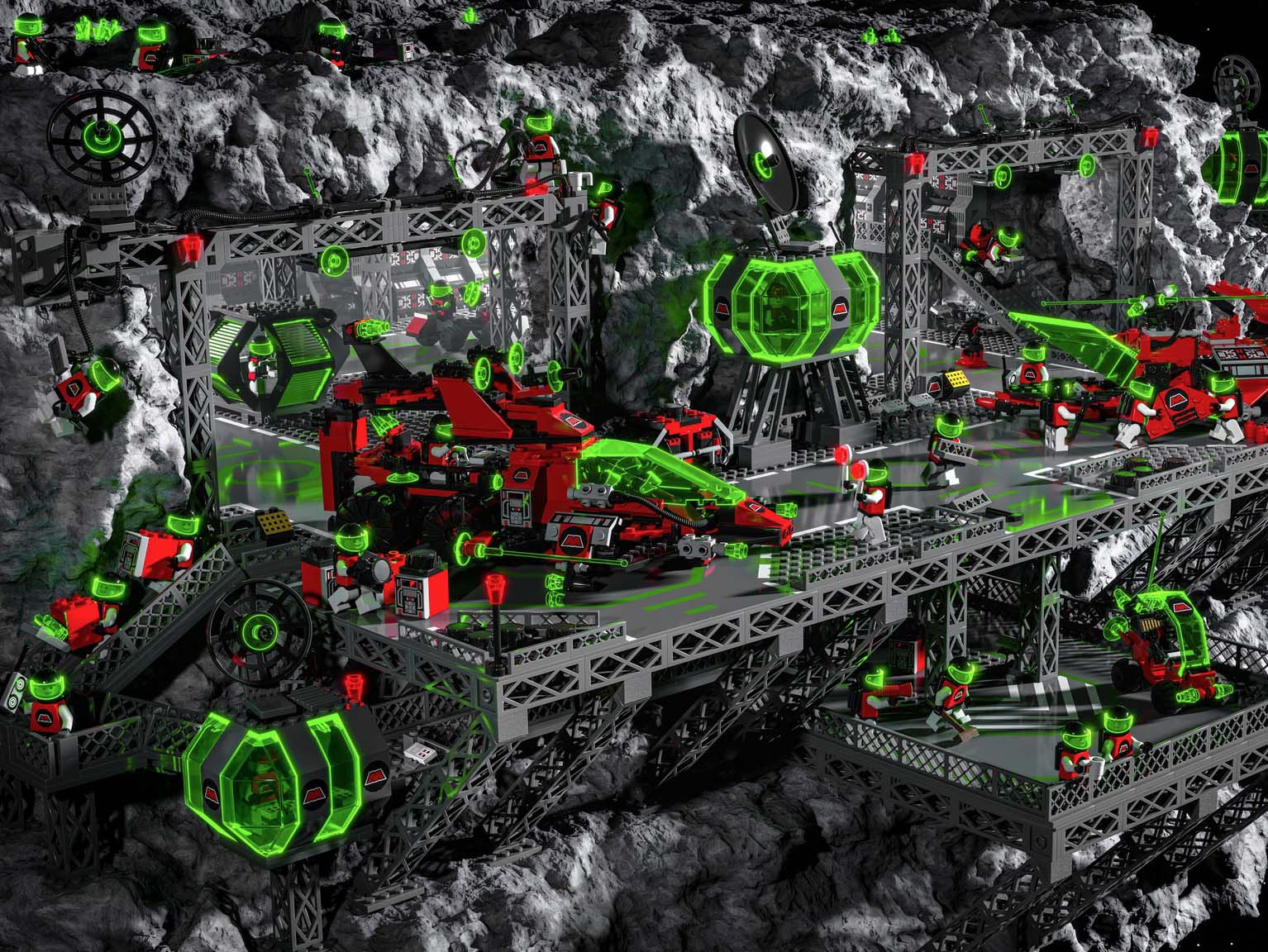
M-Tron asteroid mining render by Mariusz Pietruszka — used with permission.
Once Upon a Brick · Chapter 2
The story of how Infinite Brick came to be: the people, ideas, and moments that shaped it. Each chapter reveals another piece of the journey connecting LEGO creativity with the community around it.
Welcome! If you're new to the series, start with Chapter 1: Before the Beginning
There’s something different about the first world you choose.
Not the first brick you hold.
Not the first set you receive.
The first world.
I'm not talking about the buckets of basic bricks you may have cut your teeth on (figuratively, I hope). But the first theme that defined your early LEGO years.
For me, it was Space.
I grew up in a small town where LEGO didn’t live on store shelves. There were no aisles to wander. No impulse buys. No weekly trips to see what was new.
If I wanted LEGO, it was a 90-minute drive to the nearest Kmart, Zellers, or Sears… or it was mail order. The Sears Christmas Wishbook was a year-round reference guide. I’d flip through those glossy pages imagining fleets and factions I couldn’t quite reach.
Distance has a funny way of amplifying desire.
Ninety minutes felt far, until you compare it to the annual eight-hour drive south. That was the real pilgrimage. The place where LEGO shelves stretched wider, deeper, fuller than anything I’d seen before.
I still remember one particular Kmart run. I made a beeline for the LEGO aisle, heart racing, only to find it mostly picked over. A few small dust-covered boxes remained. Compared to the zero options back home, it still felt like abundance.
Until I checked my wallet.
That was the day I chose carefully.
Meteor Monitor.
Blacktron.
Twenty-nine pieces. A tiny ship. Hinged wings. A whole universe implied.
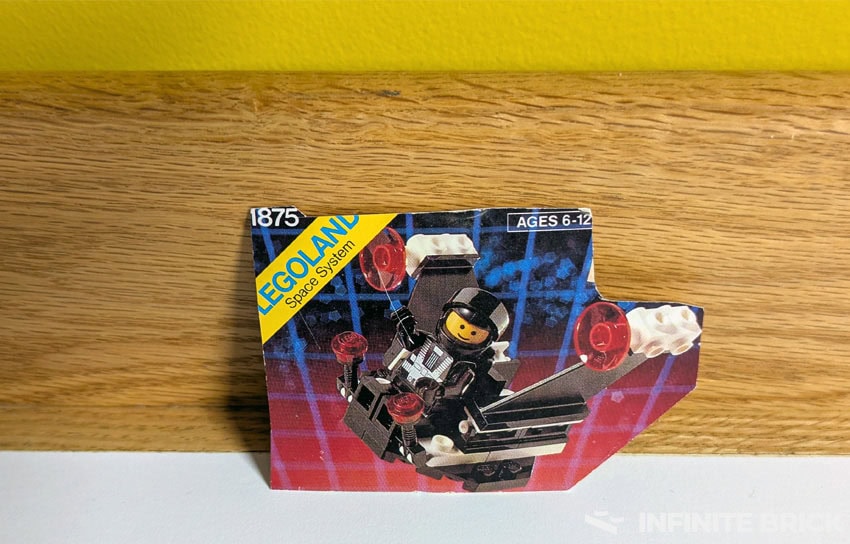
Meteor Monitor (1875). One of the first space sets I bought with my own money — the box art survived long after the box didn’t.
It wasn’t a big set.
It wasn’t even the “good guys.”
But it opened something.
Soon after came Space Police.
Then M:Tron.
And M:Tron… that was different.
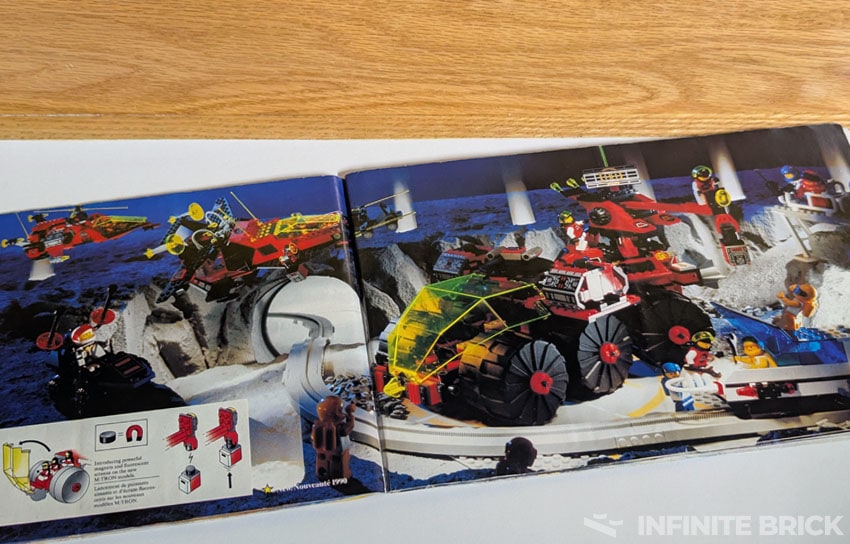
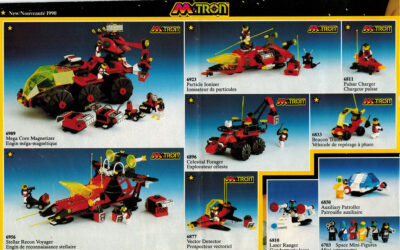
A spread from the 1990 LEGO catalogue… the kind I would flip through for hours.
They were the good guys in my mind. Red and black. Trans-neon green. Magnets that snapped up cargo pods with a satisfying click. They didn’t just sit on a shelf; they hauled cargo, ran missions, and brought whole asteroid mining operations to life.
My basement floor became contested territory. Factions formed. Alliances shifted. Stories unfolded that had nothing to do with instructions and everything to do with imagination.
I couldn’t afford to collect them all. I remember wanting to desperately, but instead, carefully choosing which box could come home with me.
Looking back, I think that tension made it stronger.
Scarcity sharpened attachment.
It wasn’t just about owning a set.
It was about belonging to a world.
In my head, those ships were part of something bigger — a living universe unfolding across the basement.
All these years later, when I saw Mariusz Pietruszka's render of an entire M:Tron mining operation on an asteroid, it looked exactly like what played out in my head as a kid.
👉 So I'm curious: which LEGO world first pulled you in?
Your answer helps me get to know our growing community, and it helps shape what we feature here.











LEGO worlds have a way of sticking with us.
If one of those early memories came back while you were answering the question, I’d love to hear about it.
Share Your Story
If you want to go a little deeper:
What was it about that theme that captured you?
Was it the colours?
The factions?
The vehicles?
The feeling of stepping into another universe?
You can share your story below – typed or recorded.
I read and listen to every one.
↓ Tell Your Story ↓
Until the Next Chapter…
LEGO worlds may start with a set…
But the ones that stay with us are the ones we built ourselves.
Thank you for being part of this.
This Once Upon a Brick series is about more than my story; it’s about the threads that connect all of ours.
Chapter Three is in the works.
— Tyler | Infinite Brick
0 Comments