

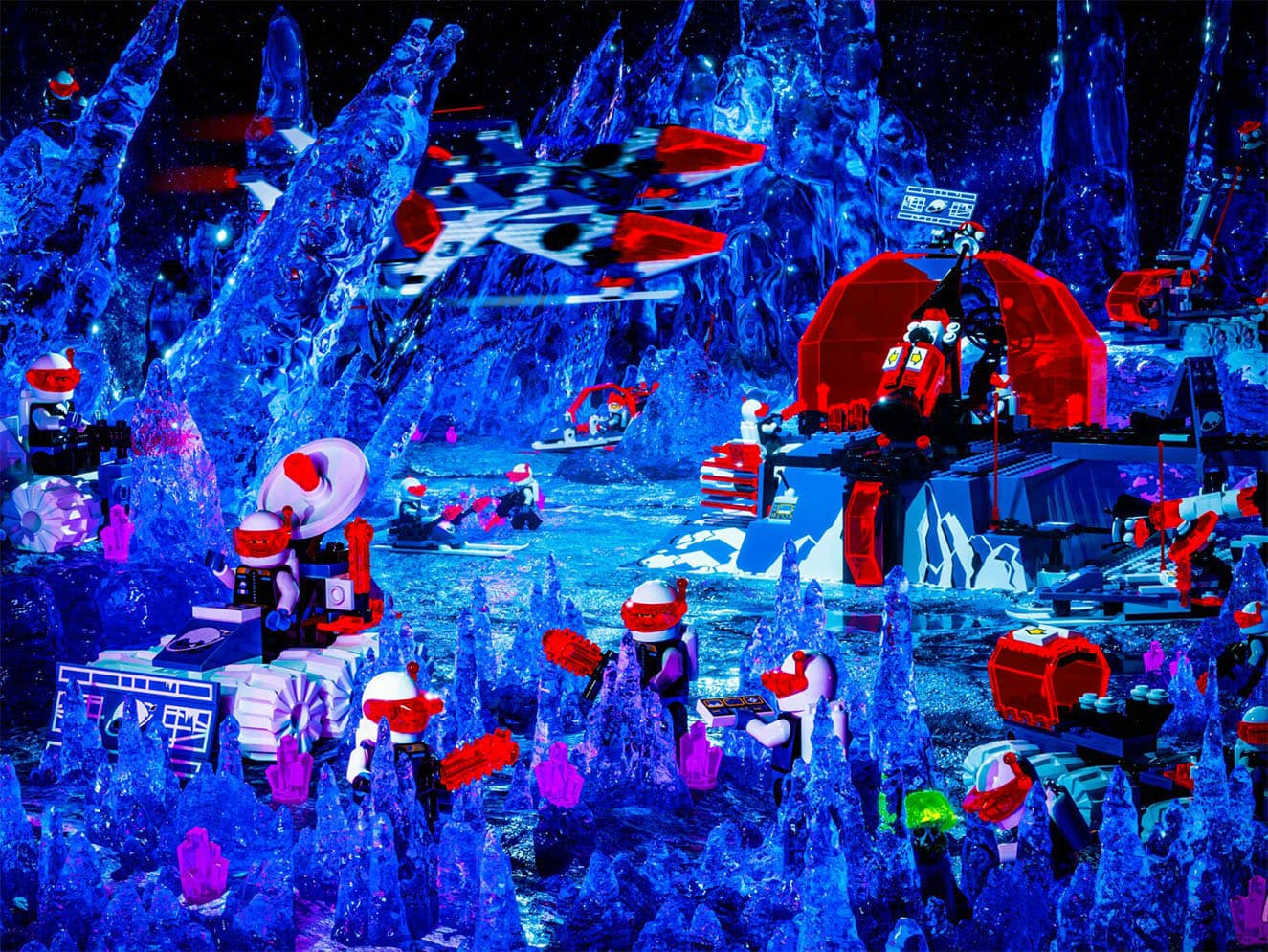
Featured image: Ice Planet 2002 exploration render by Mariusz Pietruszka. Used with permission.
Once Upon a Brick · Chapter 3
The story of how Infinite Brick came to be: the people, ideas, and moments that shaped it. Each chapter reveals another piece of the journey connecting LEGO creativity with the community around it.
Welcome! If you're new to the series, start with Chapter 1: Before the Beginning
Some LEGO pieces stay with you forever.
For me, it was a pair of trans-neon-orange skis.
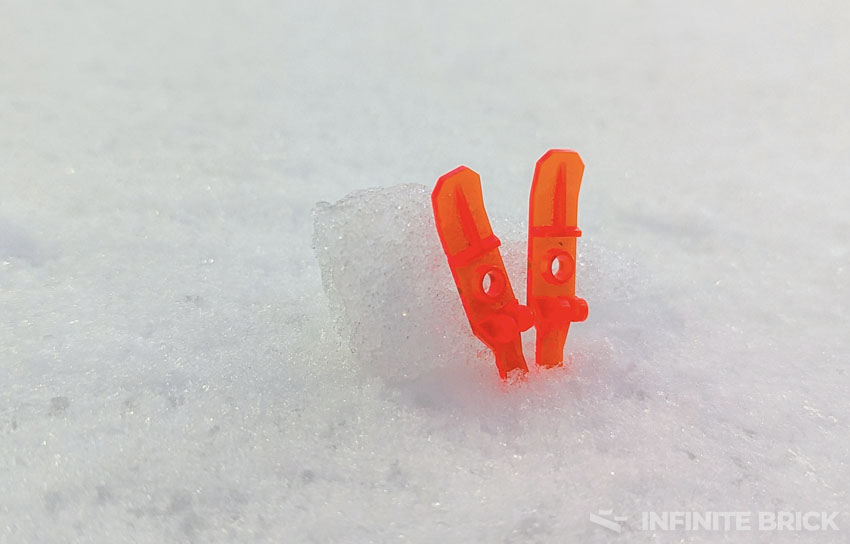
They were such a strange choice. Skis can be almost any colour: black, white, maybe red. But transparent neon orange? Who comes up with that?
Yet somehow it worked… paired with equally vibrant ice saws, no less.
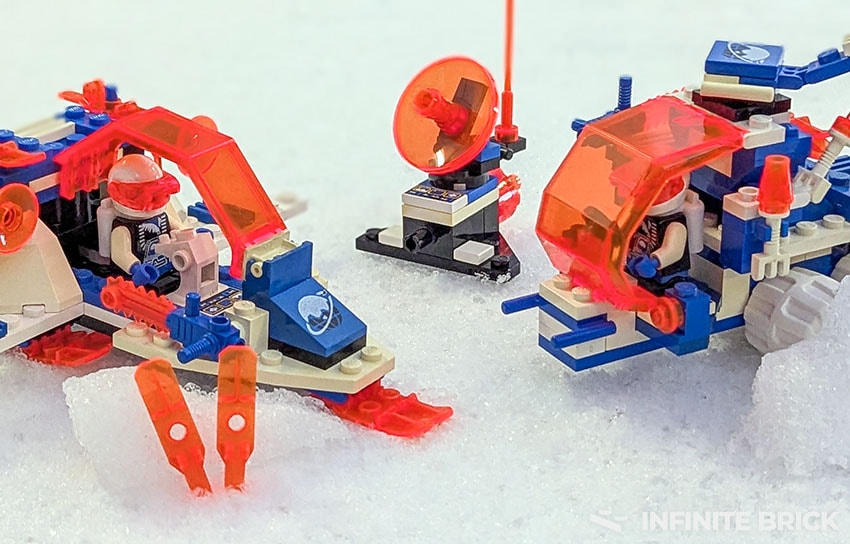
Those bright orange skis cutting across a frozen landscape felt like they were definitely exploring some distant frozen rock.
They came from a theme called Ice Planet 2002.
Released in 1993, the name alone sounded impossibly futuristic at the time.
But the sets themselves were even more captivating.
White and blue exploration vehicles crossed barren landscapes and travelled between the stars. Black accents and angular design suggested these ships and their equipment were built for the harshest of environments. Just the right amount of pop of neon-orange appeared tastefully balanced across visors, dishes, saws and those unforgettable skis.
Looking back, I think Ice Planet struck a chord with me for another reason too.
I grew up in the Great White North.
Snow, ice, and long winters were part of everyday life. So the idea of explorers venturing across frozen worlds felt strangely familiar.
And unlike some other space factions that revolved around conflict, Ice Planet felt more like an expedition.
Scientists. Explorers. Teams venturing into unknown terrain.
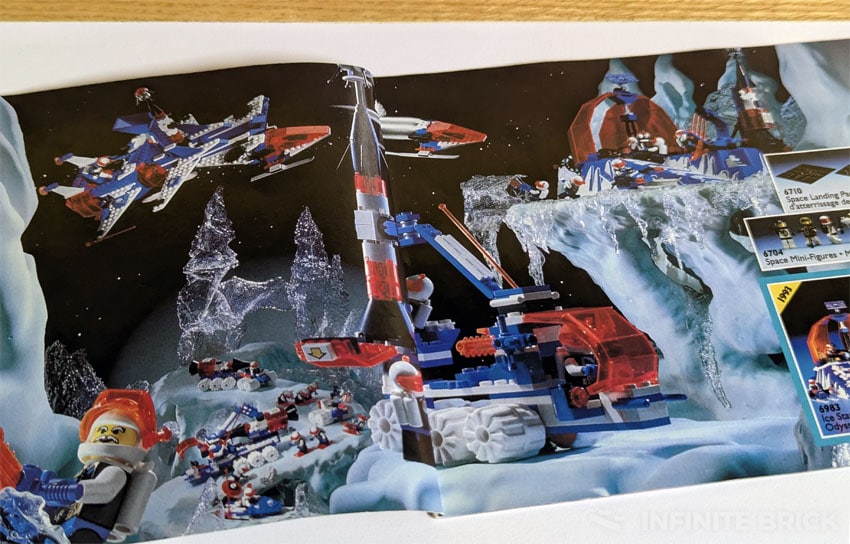
An Ice Planet spread from the 1993 LEGO catalogue. If I had a dollar for every minute I stared at this scene…
Maybe that’s why it resonated with me so deeply.
I grew up watching Star Trek: The Next Generation, where space wasn’t portrayed as a battlefield but as a frontier waiting to be explored.
Ice Planet felt like it belonged to that same universe of ideas; explorers pushing outward into frozen, unknown terrain.
And in my basement, that frontier quickly became a frontier for my imagination.
Around that time, my LEGO world started expanding beyond individual sets. I began building environments for them: entire “planets” where different factions lived and operated.
Ice Planet didn’t feel like a collection of sets.
It felt like an entire ecosystem — a world where every vehicle, base, and piece of equipment had a role to play.
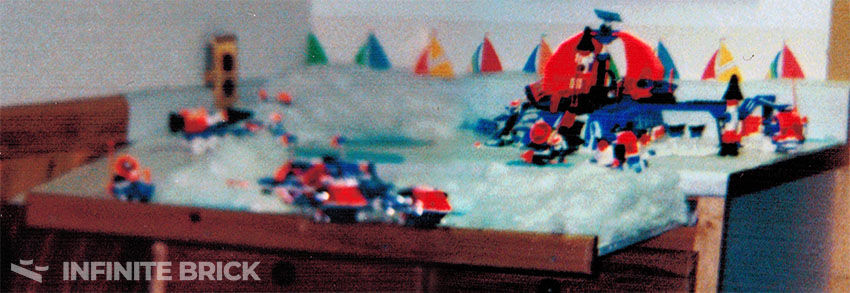
One of my early attempts at imagining an Ice Planet outpost, circa 1994.
This photo from ~1994, shows one of my earliest Ice Planet setups. At the time it occupied a small homemade workbench in the basement; a space that LEGO gradually overtook as its own.
The frozen landscapes of Ice Planet might have been fictional, but in my basement, they felt very real.
Where baseplates ended, light blue paper took over, suggesting bare ice with snow drifts dancing across it made of carefully poured salt or sugar.
Cotton balls represented deep powder, where wheeled vehicles often let their skied counterparts take the lead. In later iterations, chunks of carved Styrofoam turned into towering ice formations emulating the box art on every set.
It wasn’t perfect, but in my mind, it was the frozen frontier this crew called home.
For me, the theme as a whole was peak LEGO design. It may as well be the definition of nostalgia for me. I collected – and loved – all the ships and base, but if I had to pick just one, the Deep Freeze Defender is my favourite official LEGO ship to this day.
Ice Planet vehicles carved tracks through the snow while other factions occupied nearby worlds. My Unitron planet used strange rocks I had collected from a railway bed. Spyrius eventually appeared there too, sometimes as invaders dismantling their Monorail Transport Base, sometimes as uneasy neighbours.
Some ships never landed at all. They spent their time hanging from the ceiling, permanently “in orbit” above the planets below. (I'm thinking of you, Explorien Starship)
Looking back, that small workbench became the beginnings of an expanding universe.
And somehow, those bright orange skis were always there… carving fresh tracks across whatever frozen world I built next.
No matter how the scenes changed, those explorers kept returning to their frozen world – or discovering new ones.
Maybe that’s the real difference between the first LEGO world you fall into and the one that stays with you.
The first one sparks curiosity. (Like M:Tron did for me)
But the one that stays becomes part of how you imagine things: the worlds you build and re-build, forming the strongest memories that stick with you.
For me, that world was Ice Planet.
At the time, I had no idea those hours building frozen worlds would eventually lead somewhere unexpected.
And even today, decades later, those bright orange skis still feel like they’re pointing somewhere just beyond the horizon.
Your Turn
Last chapter I asked about the first LEGO world that drew you in. Today, I'm curious about the one that has had lasting effects.
You can share your story below – typed or recorded.
I read and listen to every one.
↓ Tell Your Story ↓
Until the Next Chapter…
Ice Planet made me imagine frozen worlds.
Eventually I started wondering something else.
How would the machines actually work out there?
Thank you for being part of this.
Chapter Four is in the works.
— Tyler | Infinite Brick
0 Comments